

By Howard Deevers
Learning to fly has many challenges in both skills and book learning. One of the many tasks that we are expected to master is talking on the radio. We must learn how to communicate with Air Traffic Control at airports and along the route with the Center controllers. On your first lesson, the instructor handles all communication on the radio. The already task saturated student could hardly be expected to understand the exchange of information coming over the radios.

As flying lessons progress, your instructor will start coaching you on what to say on the radio. Although we communicate on telephones and cell phones every day without hesitation, the one difference is that there is NO push to talk switch on cell phones. For some reason that PTT button on our control, or on the microphone if using a handheld mike, becomes a major roadblock to talking. Another difference is on the phone (cell phone) we are just speaking to one person at a time, usually. On the radio we are tuned to a frequency that may be in use by many airplanes and controllers at the same time. When we press that button to speak on the radio, we are not just talking to a controller, but every other airplane on that frequency will hear what we say as well, which can be intimidating.
Over time, you will learn what to say and when to say it. It takes some time to learn these lessons, just as learning how to land an airplane takes some time. You also learn that when you are flying and in contact with ATC that you need to listen for your call sign, so you know the instructions are for you. A lot of us do miss those calls because we are not aware that the communication was for us. When you are in a busy area, such as a Class B or Class C area, there can be more conversation on the radio than on cross country trips. In those busy areas, it is much more important to listen for your call sign. With other planes having similar sounding call signs, things can get even more confusing.

Few students are introduced to the Pilot/Controller Glossary during basic training. The Aeronautical Information Manual (AIM) contains a lot of information on communication, and there are also some good books written about Air Traffic Communications, which give you the formality of communicating on the radio with ATC. The problem is, these are not required reading during training, and you will get very little testing on communications during a Check Ride.
Everyone makes mistakes in communications at some time. That is the reason that we must read back instructions given by a controller. Even the airlines miss calls or read back an incorrect frequency from time to time. They are a bit more professional than the average private pilot. Of course they go through much more training than private pilots do, and must do retraining more often than the Flight Review required on a two year schedule for private pilots. Air traffic controllers and airline pilots do follow correct communications, most of the time.
Many non-towered airports in Arizona receive a mix of traffic from light sport up to top of the line business jets. The business aircraft are usually very professional, but even some of the announcements from them going into or departing from a non-towered airport are bewildering. I think that the private pilots have good intentions, but announcing your plans to enter a traffic pattern from 10 to 15 miles out is not helpful. I heard a pilot call on the CTAF frequency saying that he was “10 miles out, inbound to land.” I had to ask: “What direction are you from the airport? Just saying 10 miles out doesn't tell me much.” Many of the announcements will conflict with the existing traffic in the area of the intended airport. One of the most confusing GA announcements is the pilot telling of his plans to do a "straight in" approach to the runway in use, when there are 3 other airplanes already in the pattern. What did you say?
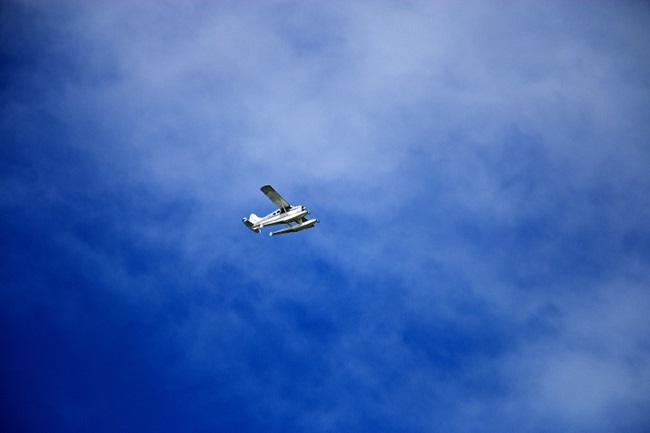
A "straight in" approach may be appropriate when there is no other traffic at an airport, which is a rare occurrence in Arizona due to the amount of training in the state. I don't know any instructors that would teach that this is an acceptable practice with traffic in the pattern at a non-towered airport, so where do they learn these things?
If you really want to confound your fellow pilots in at a non-towered airport, announce that you are “lining up and waiting” while there is traffic in the pattern. What did you say? That is not an acceptable practice at a non-towered airport. That is used at control-towered airports when tower controllers are comfortable with the spacing of traffic and can expedite a departure, but even then, there are risks. But at least a tower operator is watching your back (or should be).
Air traffic controllers stick to the standard language on the radio as much as possible. It is not an easy job, trying to figure out what a pilot wants when the pilot does not communicate in standard phrases. At times a tower or center controller will have to ask a pilot several times, “What are your intentions?” There are also times when I must ask a controller to repeat an instruction. They may be trying to communicate with several airplanes in your area, and on a busy day they will speak rather fast. “What did you say?” Or just say: “Please repeat.” Keep it short. No one needs to know what restaurant you plan to visit after you land.
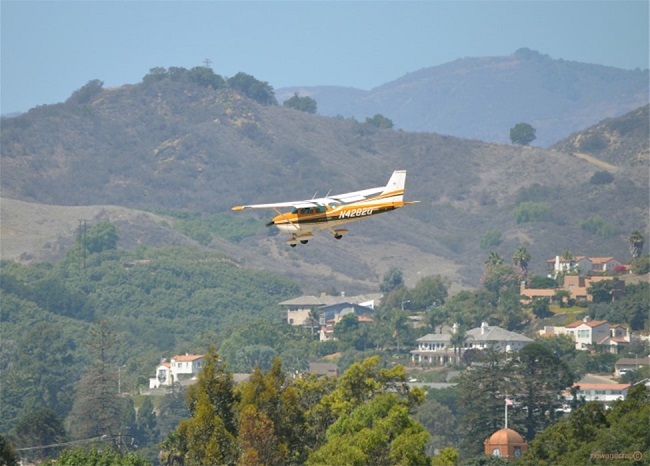
Trucker language, or CB radio language, has no place in aviation, so keep those phrases in your truck, not in your airplane. Read the Pilot/Controller Glossary and search the AIM, and you will find lots of interesting things that you may not have known before. “What did you say?” It will be worth the investment of the little time it will take to read through and learn the correct way to talk on your radio.
Come to a Safety Seminar in your area sponsored by your ARIZONA PILOTS ASSOCIATION, and the FAASTeam. They are free, and you will learn valuable information. Check the website for locations and times near you, and don't forget to “Bring your wingman!”